
Wash & Fresh Linseed Coat
Rinse interior bilges with fresh water after winter storage, lightly scuff interior cedar with a maroon pad, and wipe on a thin cut of raw tung oil and citrus solvent.
| Species | Origin | Primary Role | Working Character |
|---|---|---|---|
| Western Red Cedar | Olympic Peninsula, WA | Hull strakes & floorboards | Feather-light, naturally rot-resistant, holds clean feather-edge bevels along every lap. |
| Alaskan Yellow Cedar | Southeast Alaska & BC Coast | Keels, stems, knees, transoms | Dense, fine-grained, and exceptionally stable when alternately soaked in cold saltwater and dried. |
| Sitka Spruce | Washington Coast Salvage | Oars, spars, gunwale inwales | Unmatched strength-to-weight ratio with springy resilience through thousands of rowing strokes. |
| White Oak | Willamette Valley, OR | Steam-bent frames & breasthooks | Bends cleanly straight from the steam box and holds copper rivets without splitting. |
A traditionally oiled and painted cedar hull requires one calm weekend of maintenance each spring to stay tight for decades.
Rinse interior bilges with fresh water after winter storage, lightly scuff interior cedar with a maroon pad, and wipe on a thin cut of raw tung oil and citrus solvent.
Before UV peaks in late May, sand varnished oak gunwales and Sitka oar shafts with 220-grit paper and flow on two thin coats of marine phenolic spar varnish.
Store upside down on padded sawhorses under an open shed roof—never wrapped tightly in plastic tarps that trap damp harbor condensation against the laps.
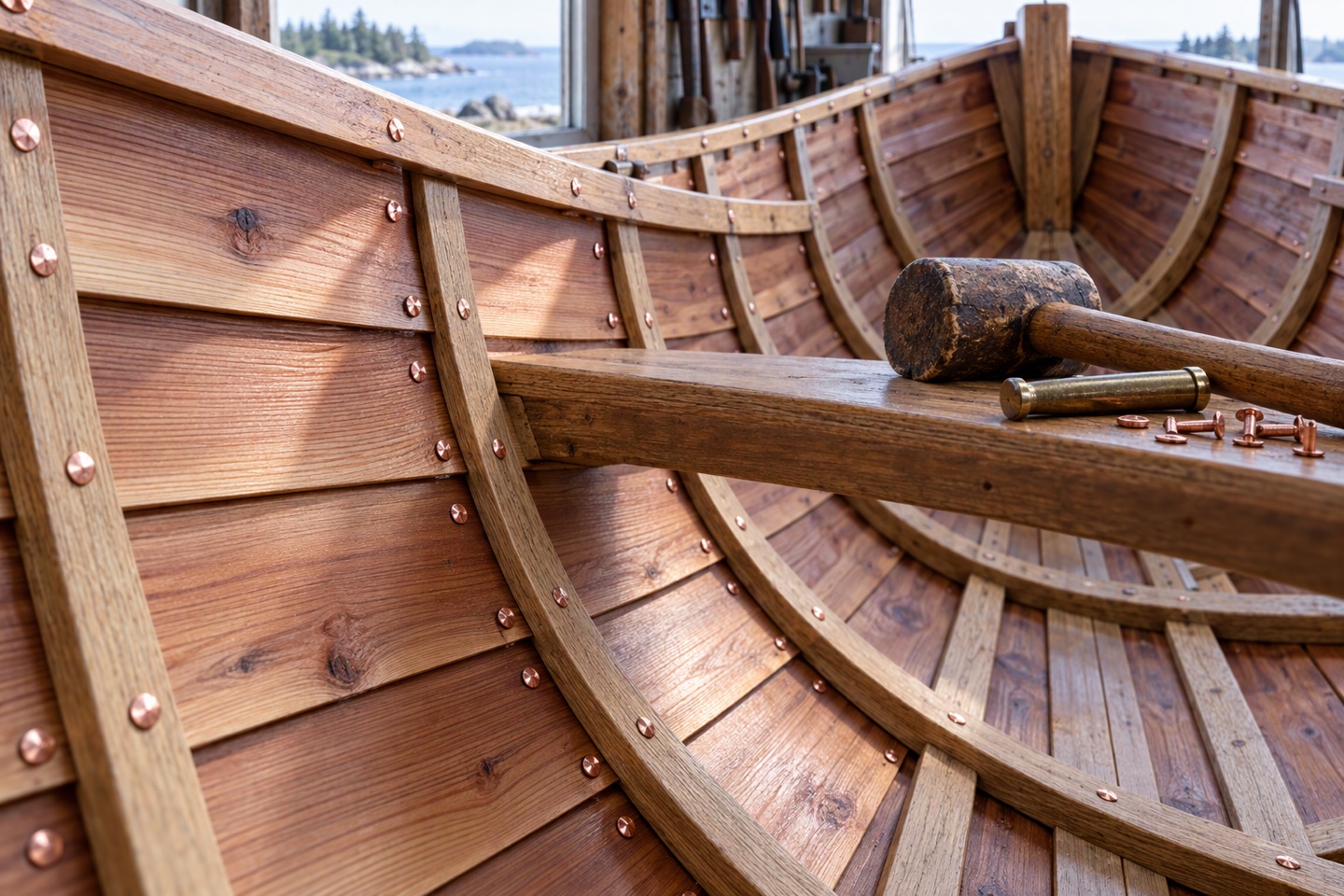
Unlike stainless screws that can suffer crevice corrosion in stagnant saltwater, pure copper nails driven through matching roves draw timber laps together evenly and can be tightened again thirty years later with two hammers.
See riveting live on Saturdays →